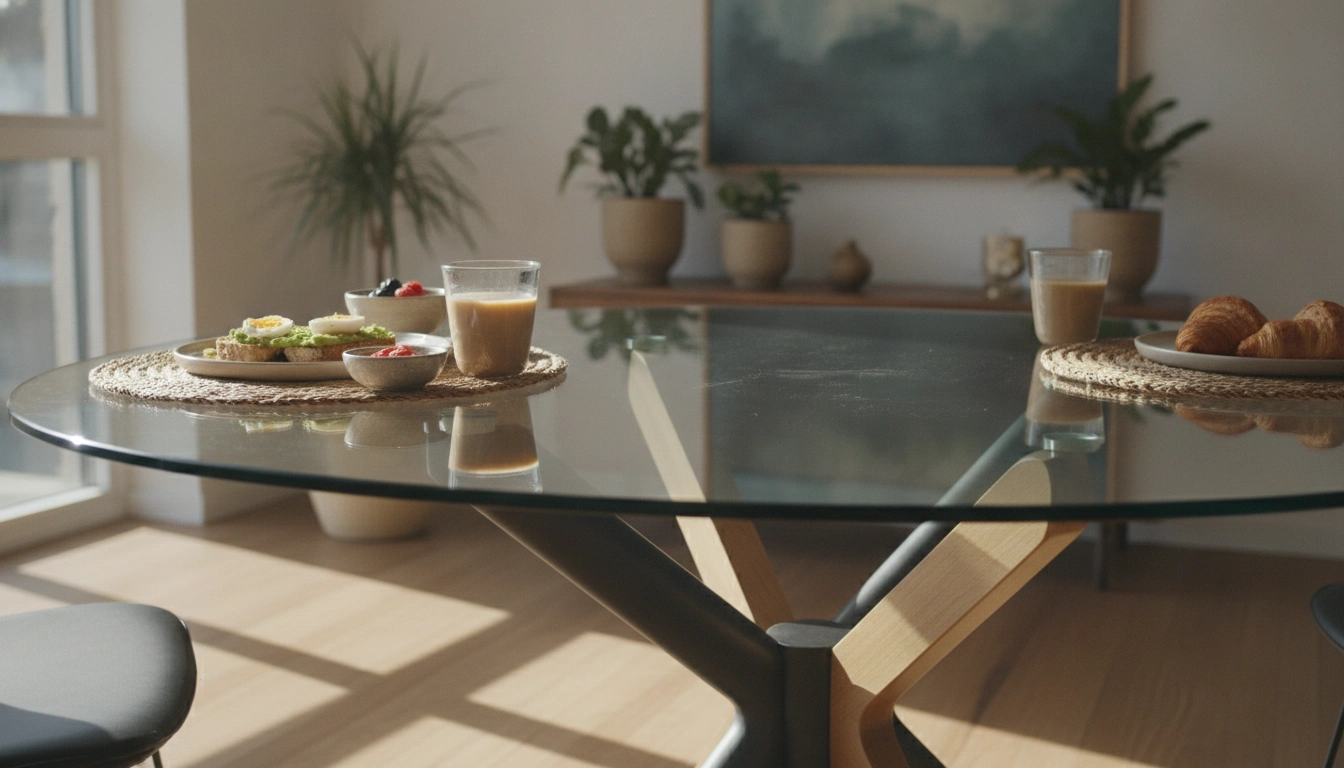
Yes—glass top dining tables are still in style, especially in modern, contemporary, and transitional spaces. Designers continue to use glass because it visually “lightens” a room, reflects natural light, and keeps sightlines open, which is a major win for smaller dining areas and open-concept layouts. Current looks often pair a clear glass top with sculptural bases in metal, wood, or stone-inspired finishes to create a clean, updated focal point.
Today’s glass tables lean into contrast and texture. A minimalist glass surface with a bold pedestal base, mixed materials (like black steel with warm walnut), or curved silhouettes reads fresh and intentional. Even classic rectangular tops feel updated when combined with matte finishes and architectural legs rather than overly ornate frames.
They can be, as long as the table uses tempered glass and you’re comfortable with a bit more visible upkeep. Glass shows fingerprints and smudges more quickly than wood, but it’s also easy to wipe clean. Many households use placemats, runners, or coasters to reduce marks and to soften noise from dishes.
Start with the base: choose one with a modern profile or a high-quality finish. Then ground the space with a textured rug, upholstered chairs, or warm lighting to keep the room from feeling too cold. For decor, keep it simple—one strong centerpiece (a low bowl, a vase, or a sculptural object) often looks more polished than multiple small items.
For deeper guidance on styles, pros and cons, and how to pick the right option for your space, visit Are glass top dining tables still in style?.
Pros include a brighter, more open look and easy wipe-down cleaning. Cons include visible fingerprints, potential glare, and the need for care to avoid chips on edges or corners.









Leave a comment