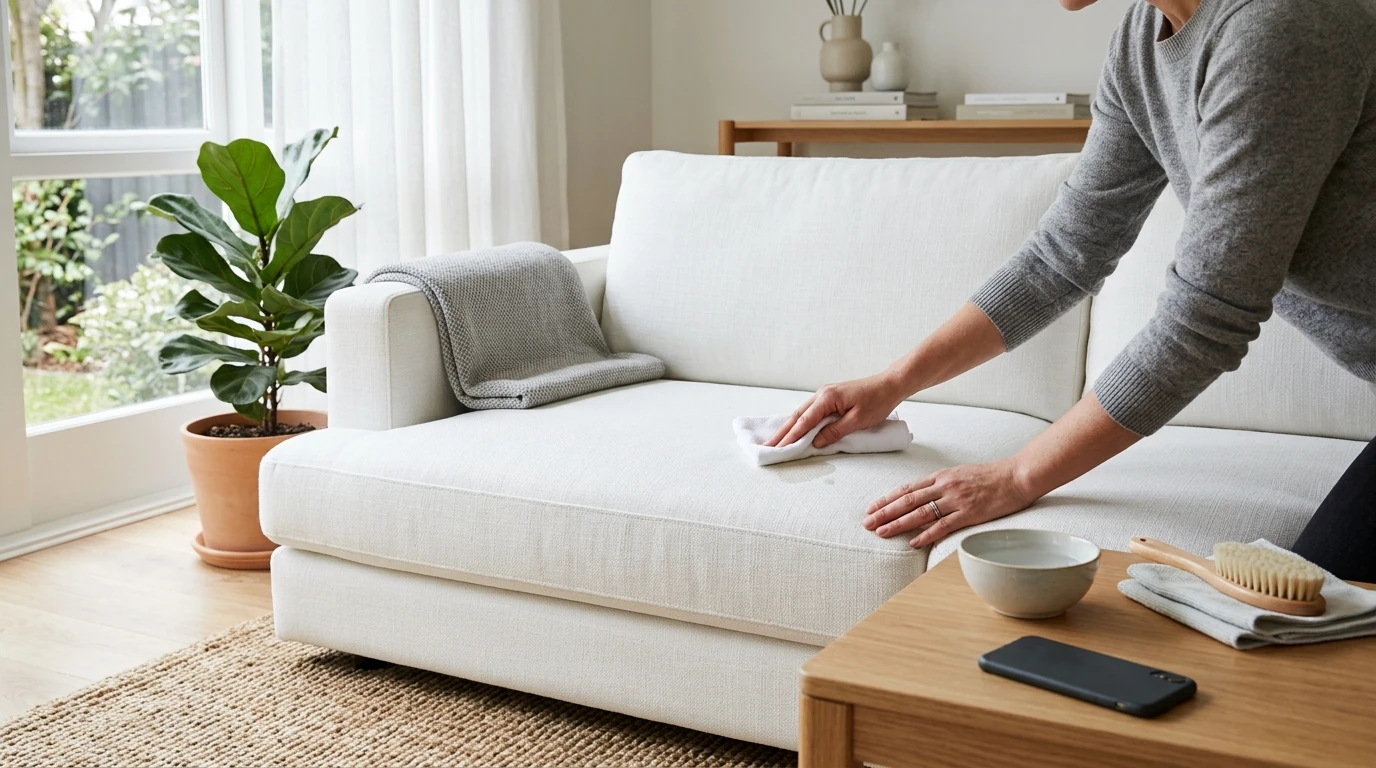
White furniture brightens a room, but it also spotlights dust, dye transfer, skin oils, and the “mystery smudge” that darker finishes hide. The good news: you don’t need harsh chemicals or constant scrubbing. With the right habits, a realistic cleaning rhythm, and fast stain triage, white pieces stay crisp while protective coatings and fibers stay intact.
Before any cleaner touches a white surface, confirm what you’re working with. Upholstered fabric, leather/faux leather, lacquered wood, painted wood, laminate/melamine, and performance fabric all respond differently to water, solvents, and friction.
Most “white turning dingy” is slow buildup: dust plus oils plus residue. Small daily behaviors keep that film from forming.
Over-cleaning can be as damaging as neglect—too much moisture, too much friction, or too-strong products can roughen fibers and dull coatings. A consistent schedule prevents “catch-up cleaning” that requires harsher methods.
| Furniture type | Weekly | Monthly | Seasonal/As needed |
|---|---|---|---|
| White upholstery (fabric) | Vacuum; lint roll | Spot treat high-contact areas | Deep clean per care code; consider professional clean for heavy soiling |
| Painted/lacquered wood | Dust; damp wipe then dry | Clean handles/edges; check for scuffs | Gentle polish if compatible; touch-up chips to seal exposed substrate |
| Laminate/melamine | Dust; damp wipe then dry | Degrease around dining/desk zones | Avoid abrasives; treat edge swelling immediately by drying thoroughly |
| Leather/faux leather | Dry wipe; vacuum seams | Wipe with leather-safe cleaner | Condition (leather only) per manufacturer guidance; keep away from direct heat |
If you’re unsure about a cleaning product, look for credible safety guidance and follow ventilation directions. The EPA Safer Choice program can help identify safer cleaning products, and the CDC’s cleaning guidance covers safe chemical use and airflow basics.
When a spill hits white furniture, technique matters more than strength.
Use the least aggressive option first and repeat light passes rather than one heavy soak. If you need chemical disinfectants, follow safe-handling practices and ventilation guidance from NIOSH chemical safety resources.
Lift solids with a spoon edge, then blot with a small amount of mild dish soap diluted in distilled water. Rinse by blotting with clean water (don’t flood), then press with a dry towel until no moisture transfers.
Blot immediately. Use a mild detergent solution and repeat gentle blotting cycles. Patience beats saturation—too much water can spread tannins and create a larger halo.
If you want a single reference you can save to your phone or keep in a cleaning binder, Keeping White Furniture Pristine (digital download guide) organizes daily habits, weekly schedules, and stain-specific steps—plus a structured method for documenting results and setting reminders.
Plan on weekly vacuuming or wiping, monthly attention to high-touch spots, and a seasonal deep clean for most households. If you have pets, kids, or heavy daily use, deep cleaning may be needed more often—just avoid over-wetting and harsh scrubbing.
Blot immediately with a clean white cloth, working from the outside in, and start with cool water before stronger solutions. Follow the care tag code, test in a hidden area, and dry the area thoroughly to prevent rings or yellowing.
Common causes include UV exposure, body oils, smoke/cooking residue, cleaner buildup, and natural material aging. Prevent it with regular dusting, gentle residue-free cleaning, UV control, and making sure surfaces and cushions dry completely after any wet cleaning.













Leave a comment