
Restrained maximalism is the sweet spot between “barely there” minimalism and full-throttle maximalism. It balances bold personality with intentional editing—layering pattern, color, and collected objects while keeping a room calm, functional, and modern. The goal is a space that reads cohesive from across the room and reveals richness up close through texture, art, and small details.
Restrained maximalism is a layered look with a clear structure. Start with strong foundation pieces (sofas, beds, rugs, casegoods), then add art, textiles, and objects in purposeful stages.
“More” is allowed, but every addition needs a job: comfort (a throw you actually use), contrast (a sleek lamp on a vintage table), story (travel finds), or function (a tray that corrals daily clutter). The big difference from full maximalism is restraint in focal points and palette control—fewer competing “look at me” moments, more negative space, and clearer zones that keep the room easy to live in.
Choose 2–3 core colors plus 1 accent. Repeat them across the room—art, pillows, ceramics, and even book spines—so the space feels unified rather than random.
Mix shapes (curves plus clean lines), but limit how many statement forms exist in one zone. If your coffee table is sculptural, keep side tables simpler. If your headboard is dramatic, go quieter on nightstands.
Layer hard/soft and matte/shiny: wood with metal, linen with velvet, glass with ceramic. This adds depth without adding visual clutter. If you want a quick way to sanity-check balance, lean on basic design elements like line, texture, and space (see The Getty’s overview of the elements of art).
Use one dominant pattern, one supporting pattern, and one “texture-as-pattern” (bouclé, ribbed wood, nubby linen). This creates complexity while keeping the room legible.
Reserve at least one calm surface or field: a mostly clear console top, an open wall section, or a simplified rug area. Negative space is what makes the layers feel curated, not chaotic.
Remove duplicates and anything that doesn’t fit the room’s story (era, mood, or color family). “Same thing, different color” is where clutter starts.
Group objects into odd-number vignettes (3s and 5s work well). Vary height and texture, but keep one shared color note so the cluster reads as a unit.
Add one “edge” per vignette: gloss next to matte, geometric next to organic, old next to new. One strong contrast is usually enough to make the grouping feel intentional.
Echo one element across at least three locations—brass tone, black linework, a particular green, or a repeated shape. Repetition is the hidden structure behind a layered look.
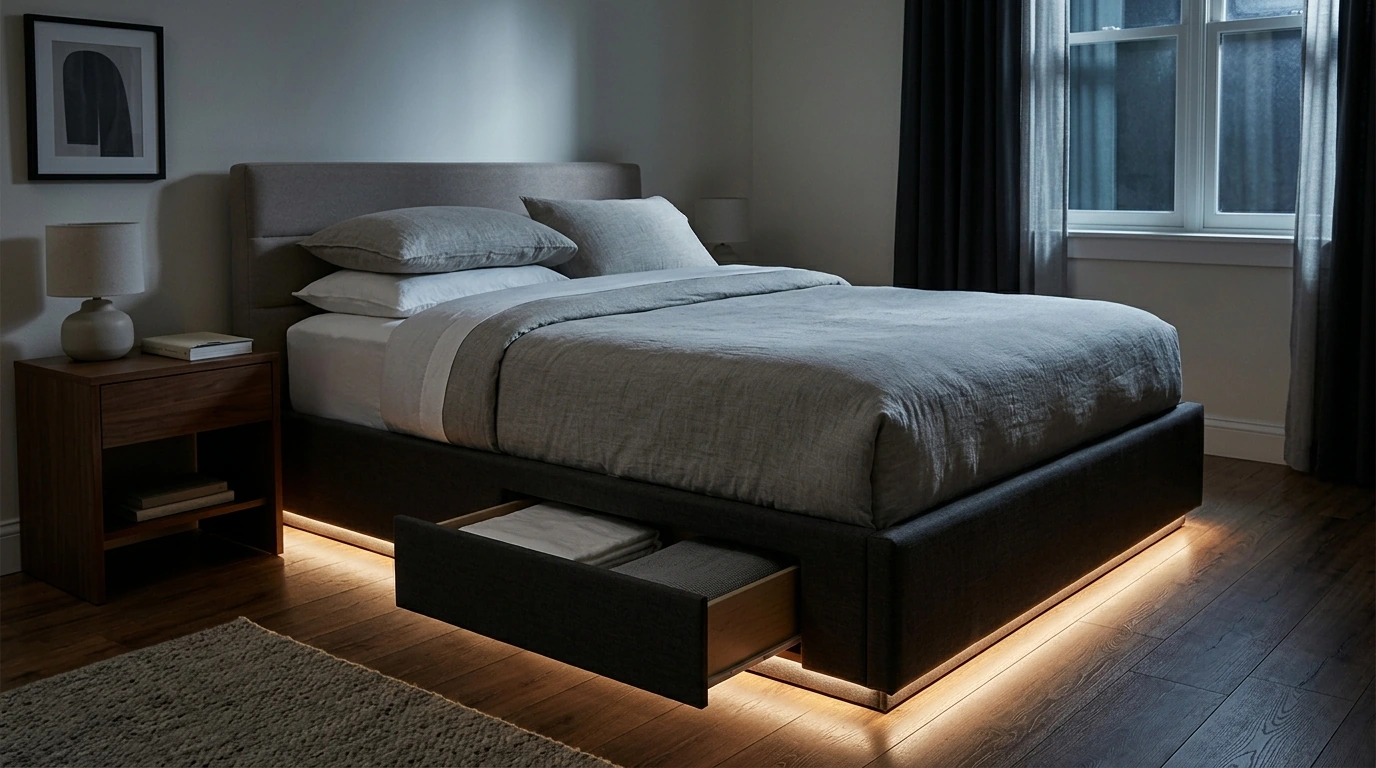
Keep bedding tonal and add richness via texture—matelassé, linen, velvet, or a chunky knit. Concentrate pattern on one feature: either the headboard wall or the rug, not both at full intensity. For a strong, grounding foundation piece, a substantial frame like the Wooden Double King-Size Bed Frame can help the room feel structured before you add layers.
Contain visual variety inside storage zones—closed drawers, baskets, and file solutions—so the desktop stays functional. A warm, practical anchor like the Cinnamon Cherry Finish Computer Desk with Storage makes it easier to keep supplies tucked away while still styling one curated cluster.
| Room | One bold move | Two layering moves | One restraint rule |
|---|---|---|---|
| Living Room | Oversized art or statement rug | Textile mix + table lamp glow | One surface stays mostly clear |
| Bedroom | Patterned rug or feature wall | Layered bedding textures + art pair | Limit to one dominant pattern |
| Dining | Sculptural pendant or centerpiece | Runner + mixed materials (wood/metal) | Keep chair silhouettes consistent |
| Office | Gallery wall or bold chair | Closed storage + desk vignette | Desktop remains functional first |
| Entry | Mirror with character | Tray + small art/object | No more than 3 items on the landing zone |
Also consider the “invisible” comfort layer: if you’re painting, refinishing, or adding new pieces, follow smart indoor-air practices around ventilation and product selection (the EPA’s guide to VOCs in the home is a helpful reference).
If you want the process organized into clear, repeatable steps, The Art of Restrained Maximalist Interiors (digital download) breaks the style into practical decisions: defining a palette, planning focal points, and building layered rooms without overfilling surfaces.
It pairs especially well with “structure-first” furniture that supports order—nightstands with drawers, desks with storage, and pieces that simplify charging and cables. For example, the Modern Fluted Nightstand Set of 2 with Charging Station adds both texture and everyday functionality, making it easier to keep bedside styling intentional rather than messy.
Restrained maximalism is intentional: it uses a limited number of focal points, a repeated palette, and defined display zones with negative space. Clutter is unedited, visually scattered, and gets in the way of how the room functions.
Edit and rearrange what you already own first, then add one statement piece (like art or a rug) to anchor the room. Layer in affordable textiles and thrifted objects in curated clusters, while keeping a tight color palette.
Yes—keep clean-lined furniture, open floor space, and strong sightlines. Concentrate detail in textiles, art, and lighting rather than adding more furniture.











Leave a comment