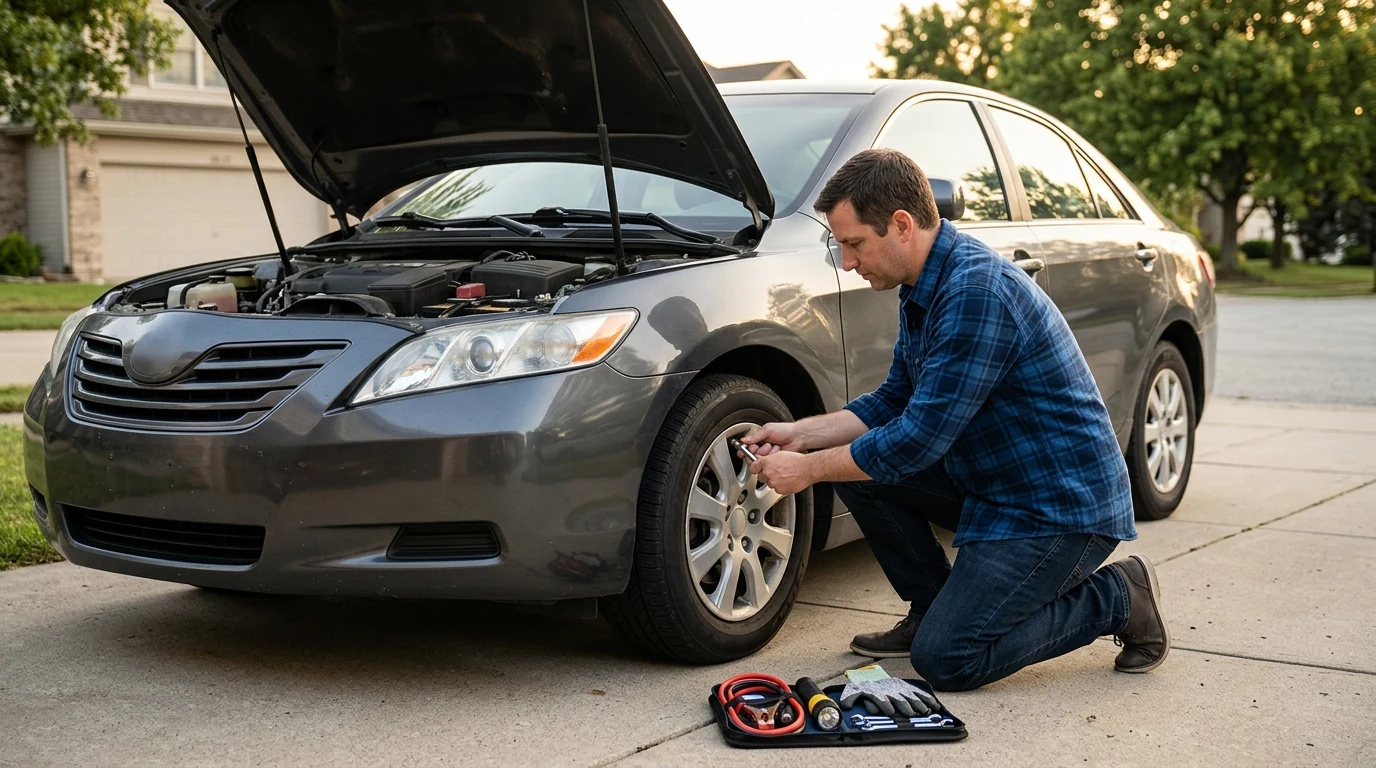
A road-ready car starts with a quick, repeatable routine: check what affects safety first, then reliability, then comfort. The goal is simple—spot small issues early so they don’t become a blowout, a dead battery, or a stressful roadside stop. The steps below follow an easy flow you can use before daily driving, once a month, and the day before a longer trip.
If you prefer having a printed checklist you can keep in the glove box, see Getting the Car Road-Ready for a ready-to-use reference you can reuse all year.
This is the “eyes first” routine that catches the most urgent problems fast—especially tires, lights, visibility, and anything that looks out of place.
Do one lap around the vehicle. Look for fresh leaks under the engine or near the wheels, a tire that sits noticeably lower, cracked or missing light lenses, loose trim, or anything hanging down that could drag or snag.
Scan each tire for uneven wear, bulges, or sidewall damage. If any tire looks underinflated, check pressure with a gauge when the tires are cold and set it to the driver-door placard (not the tire sidewall). For tire safety basics and warning signs, the NHTSA tire safety guide is a solid reference.
Confirm headlights (low/high), brake lights, turn signals, and hazards work. If lenses are hazy or dirty, clean them—visibility is a safety feature, not a cosmetic detail.
Check for new windshield cracks (especially in the driver’s sightline), torn wiper edges, and low washer fluid. Clean mirrors and the rear camera lens (if equipped) so you’re not guessing in rain or at night.
During the first minute of driving, pay attention: pulling to one side, grinding, squealing, vibration, or a soft pedal are all reasons to slow down and plan service before the next long drive.
Under-hood checks help prevent overheating, wear, and “mystery” warning lights. When in doubt, use your owner’s manual for locations and specifications, and avoid opening anything that’s hot or pressurized.
If your vehicle has a dipstick, check the level on level ground and top off only if needed. Use the oil grade listed in the manual and keep an eye on the change interval; running low can cause rapid engine damage.
Check the reservoir level only when the engine is cool. Never open a hot radiator cap. If coolant is repeatedly low, it may indicate a leak worth addressing before it becomes an overheating event.
Look for corrosion on terminals and confirm the battery is secured. Slow cranking, flickering electronics, or repeated jump-starts are signs the battery may be nearing end-of-life—test it before a trip. The AAA maintenance and safety resources can help you prioritize what to inspect and when.
| Item | What to look for | How often | Action if not OK |
|---|---|---|---|
| Tire pressure | Matches door-jamb placard (cold) | Monthly and before trips | Inflate/deflate; inspect for slow leaks if pressure drops repeatedly |
| Tread depth | Wear bars not flush; adequate depth for wet roads | Monthly | Replace tires in pairs/sets as recommended; rotate as needed |
| Uneven wear | One edge worn, cupping, or scalloping | Monthly | Schedule alignment/suspension inspection; correct inflation |
| Spare tire & tools | Spare inflated; jack and tools present | Quarterly | Inflate spare; replace missing tools; confirm lock-key/adapter |
| Brake feel/noise | Firm pedal, no grinding/squeal, no pull | Every drive | Inspect pads/rotors and fluid; service promptly |
Mount and charge safely, and set navigation before moving. If you like keeping documents and maintenance notes organized at home, a simple workstation can help; the Cinnamon Cherry Finish Computer Desk with Storage is one option for storing logs, receipts, and manuals in one place.
An emergency kit is less about “survival” and more about reducing risk while you wait for help. The CDC’s motor vehicle safety guidance reinforces how preparation and safe choices reduce injury risk on the road.
For a simple, reusable checklist you can keep with your documents, Getting the Car Road-Ready is an easy way to make the routine stick.
Check tire pressure at least once a month and before longer trips. Use the driver-door placard for the correct numbers and measure when tires are cold; big temperature swings can change pressure enough to matter.
Treat oil pressure, overheating, and brake system warnings as urgent and avoid driving until you confirm it’s safe. For other lights, consult the owner’s manual, check for obvious causes, and get diagnostics if the light persists or the vehicle drives differently.
Do a quick 10-minute priority check: tire pressures and visible tire condition, lights, oil and washer fluid levels, wipers, and a short brake/steering feel test. If anything feels off—noise, vibration, pull, or warning light—schedule service before you leave.











Leave a comment